
Step one: clean and look
Everything comes out of the trough by hand and the downspouts get flushed. You can't evaluate a gutter that's full.
With it empty we check hanger spacing, pull on the run to see if anything's loose, look at the miters for weeping, and check where the water sits when we flush it.
Step two: fix what's wrong first
Rehang anything sagging on hidden hangers. Reseal weeping corners. Correct pitch if water is standing.
If the gutter is worn through or too far gone, we stop and have the replacement conversation instead. Putting guard on gutter with two years left in it wastes the guard.
Step three: mount
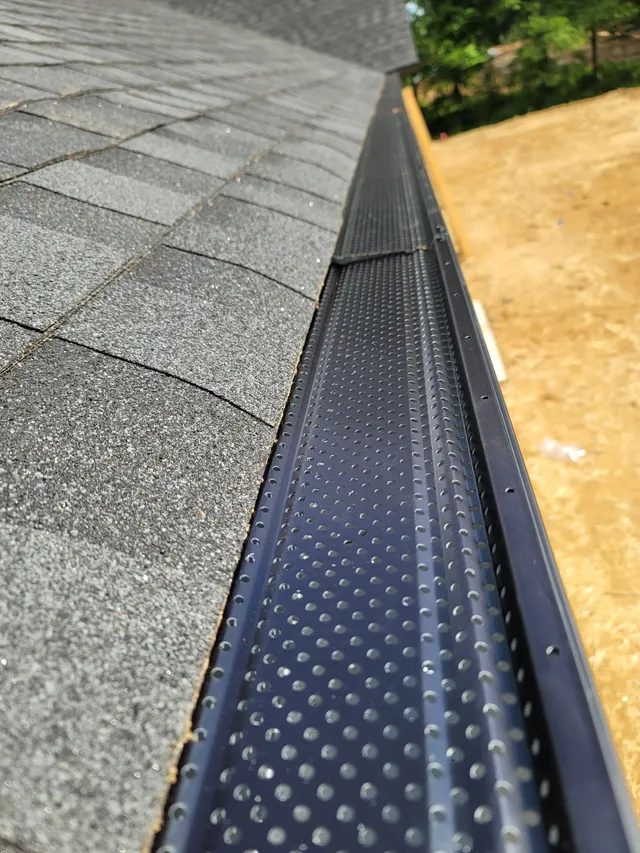
Under the first shingle course where the roof allows it, or on standalone brackets where it doesn't. Brackets go on brittle or aging asphalt, on some metal roofs, and anywhere lifting a shingle risks a leak.
Sections overlap in the direction of water flow and get fastened so nothing lifts in wind. Ends get closed off — an open end is an invitation.
Step four: water test
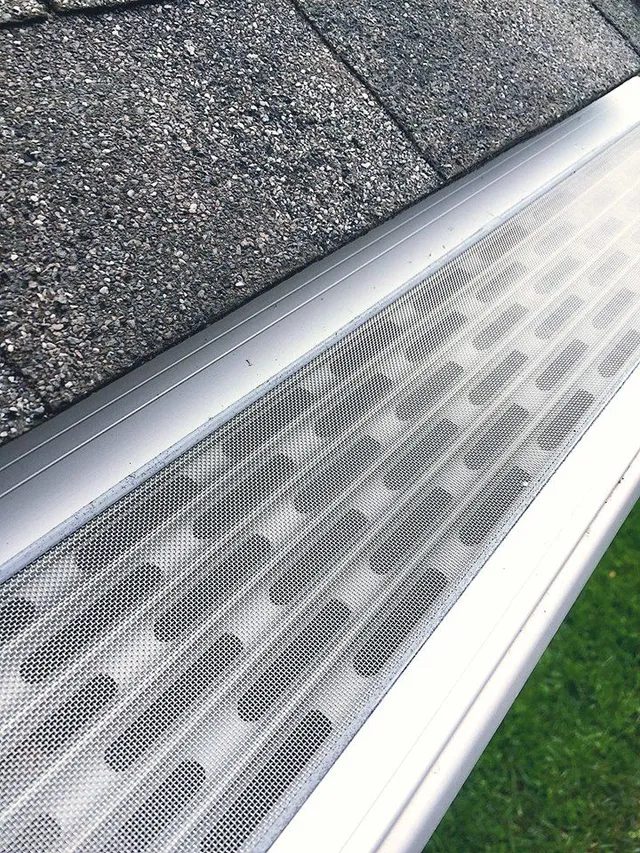
We run a hose across the roof plane, watch the water pass through the mesh, and confirm every downspout discharges.
You'll get told what we found and what we corrected. If a downspout discharges somewhere it shouldn't, that's the moment to talk about extensions.
Questions people ask
How long does gutter guard installation take?
Most homes are a single day, often half a day on a ranch.
Do you clean the gutters first?
Always. Guard over a dirty gutter seals the debris in.
Will installers walk on my roof?
Minimally, and only where it's safe. On aging asphalt we use bracket mounting and stay off the field of the roof.
What if my gutters need repair first?
We'll tell you before we install anything and quote the repair separately. We don't guard a failing gutter.
Free estimate
We measure, we look at the fascia, and you get a number in writing.
Talk to a real St. Louis gutter company
Third generation, family-run since 1947. Somebody picks up, day or night.