
The steep-roof problem
On a 10/12 or 12/12 pitch, water doesn't trickle into the gutter — it launches off the edge with real horizontal speed. A narrow 5-inch trough gives it a small target and a lot of it goes over the front.
West county has a lot of these roofs. Chesterfield, Wildwood and Town and Country subdivisions from the 90s are full of steep pitches with the smallest gutter the builder could specify.
Roof area, not roof size
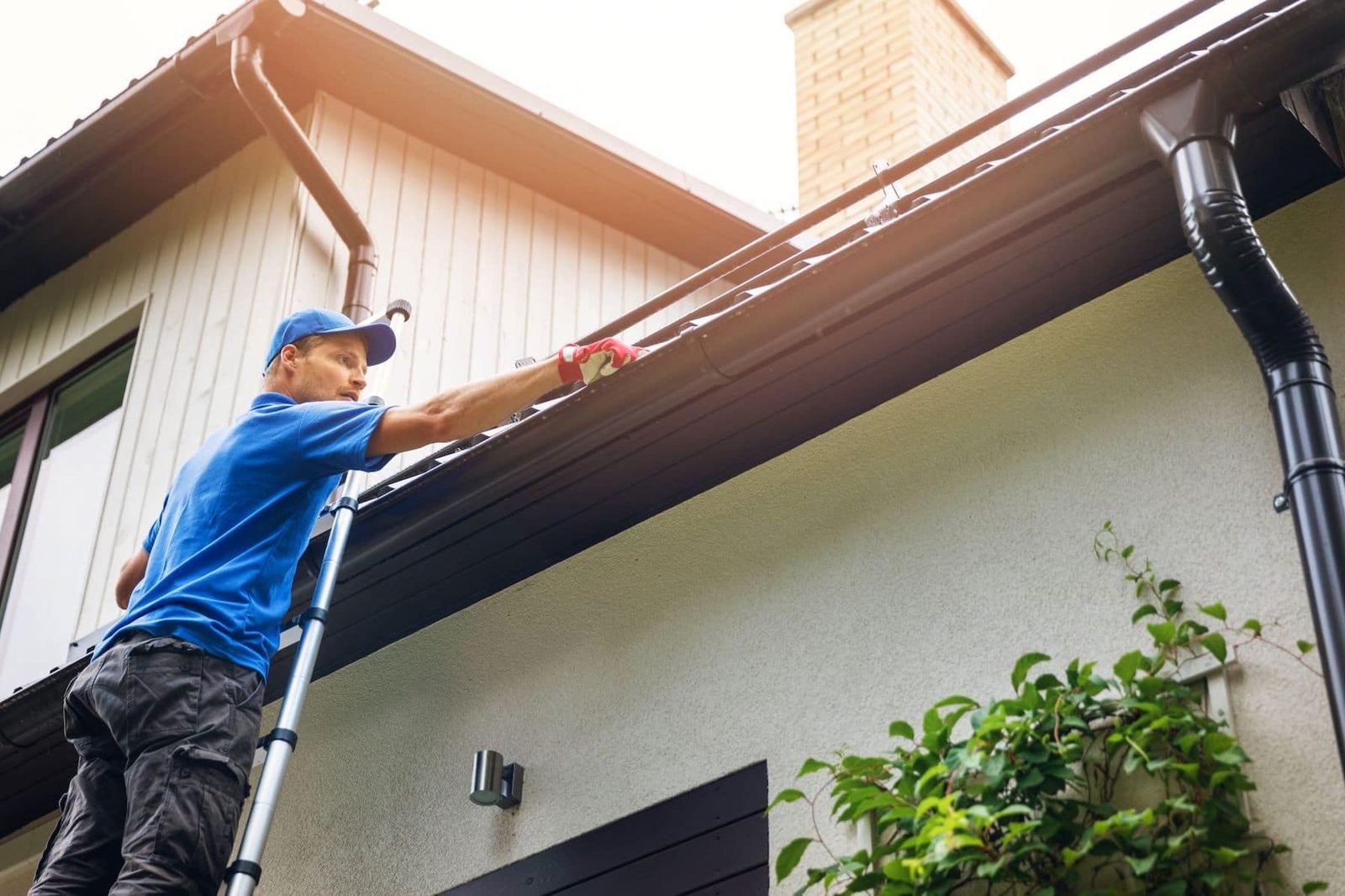
What matters is the area of the specific plane feeding one run. A 2,000-square-foot house with four small planes is easier on a gutter than a 1,600-square-foot house with one enormous rear slope.
We measure the planes rather than the house.
The 3x4 downspout
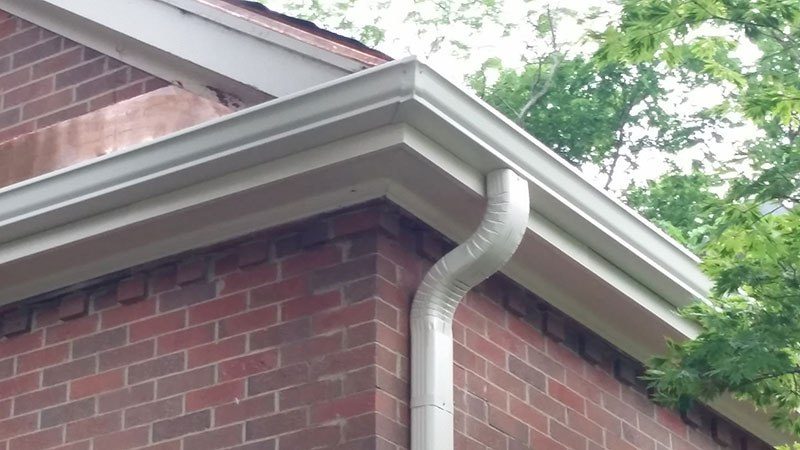
Going 6-inch without upsizing the downspout is half a fix. A 3x4 has about twice the cross-section of a 2x3, it clogs far less readily, and it can actually empty a 6-inch trough during a downpour.
The bigger drop is also less likely to jam at the elbow, which is where most downspout blockages happen.
Cost and appearance
Six-inch runs maybe 20 to 30 percent more per foot than 5-inch. On a house that's overflowing every storm, that's a cheaper answer than repeated water damage at the foundation.
It looks slightly heavier from the street. On a large home with deep fascia, most people think it looks better proportioned.
Questions people ask
Do I need 6-inch gutters?
If your roof is steep, a plane is large, or clean gutters still overflow in heavy rain, probably yes.
Will 6-inch gutter fit my fascia?
On almost all homes, yes. Very narrow fascia boards occasionally need a trim detail, which we'd flag at the measure.
Does 6-inch cost much more?
Roughly 20 to 30 percent per foot, plus the larger downspouts.
Can I keep my 2x3 downspouts?
You can, but you'd be leaving most of the benefit on the table. 3x4 is what makes the bigger trough work.
Free estimate
We measure, we look at the fascia, and you get a number in writing.
Talk to a real St. Louis gutter company
Third generation, family-run since 1947. Somebody picks up, day or night.