
Contributing roof area
Measure the plane that drains into the run, not the whole house. A single 900-square-foot rear slope feeding one 30-foot gutter is a harder problem than 1,800 square feet split across four planes.
This is the number most homeowners are surprised by. Two houses of identical square footage can need completely different gutter systems.
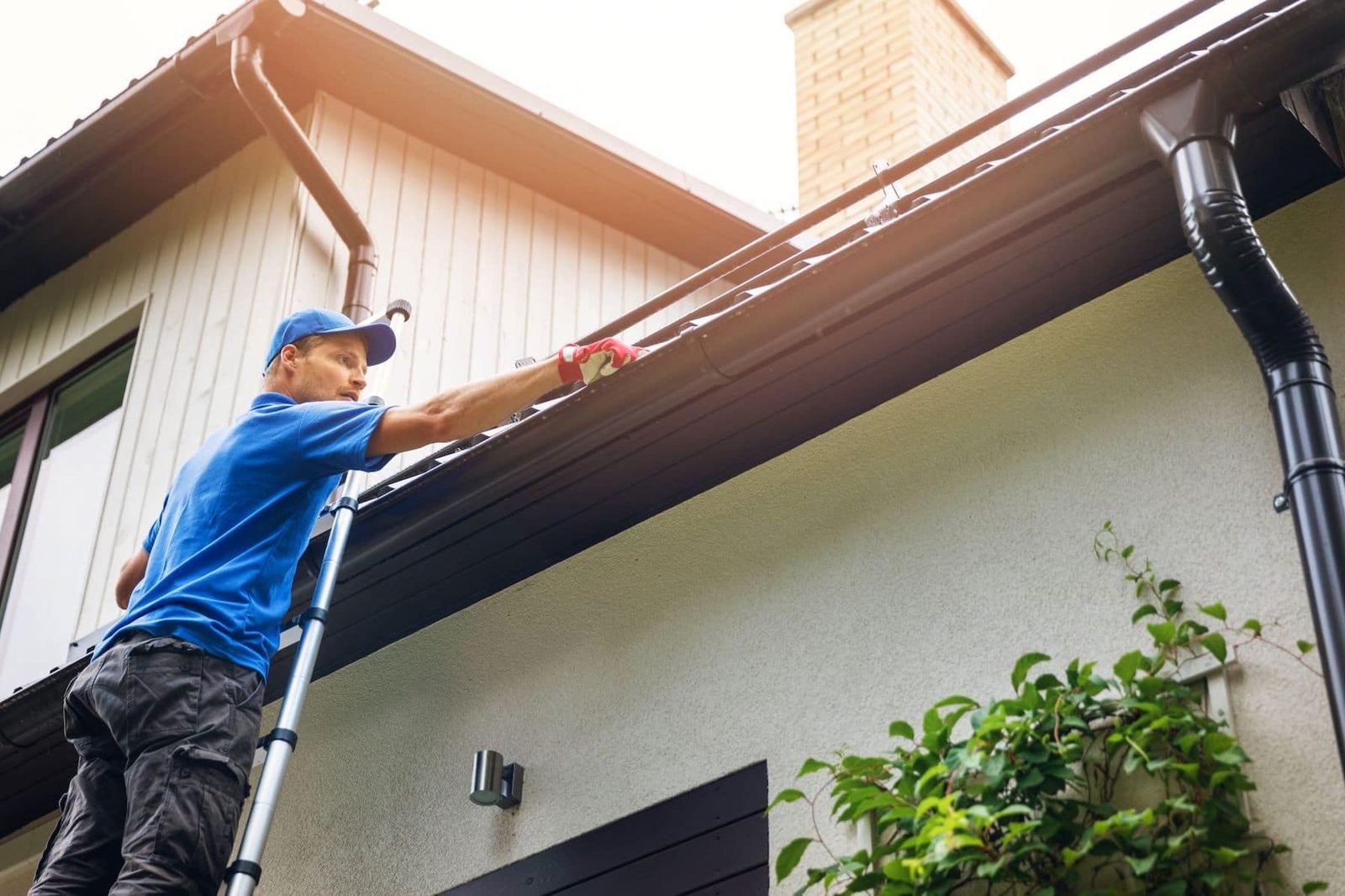
Pitch multiplier
Steeper roofs deliver water faster and effectively increase the load on the gutter. A 12/12 pitch behaves like a substantially larger flat area than a 4/12 of the same footprint.
Steep pitch also throws water horizontally, so some of it clears a narrow trough entirely. That's an argument for a wider gutter independent of capacity math.
Downspout count and size
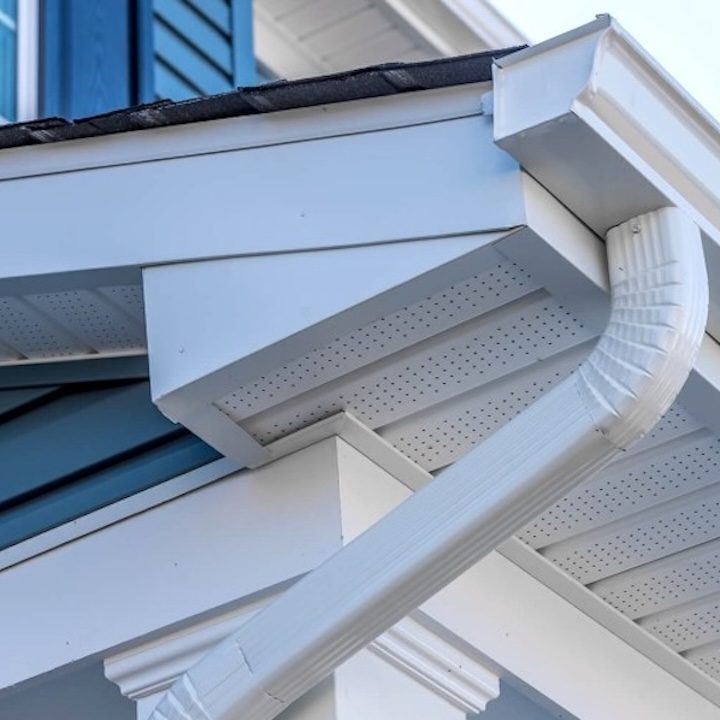
One downspout per 30 to 35 feet of run is the working rule, tightened where the contributing area is large.
A 3x4 downspout moves roughly twice what a 2x3 does. Going up in downspout size is usually cheaper than going up in gutter size and often more effective, because the trough is rarely the bottleneck — the drop is.
What we actually do
Walk the roof planes, measure the runs, count and size the drops, and look at where the water ends up. Then spec.
Most homes come out 5-inch with adequate drops. Steep west county roofs and large planes come out 6-inch with 3x4. Commercial gets box gutter sized to the building.
Questions people ask
What size gutter do I need?
5-inch on most homes. 6-inch where the roof is steep or a plane is large.
How many downspouts per gutter run?
One per 30 to 35 feet, more where a large roof plane feeds the run.
Does roof pitch affect gutter size?
Yes, significantly. Steep roofs deliver water faster and throw it further off the edge.
Is a bigger downspout better than a bigger gutter?
Often, and it's usually cheaper. The downspout is more often the bottleneck.
Free estimate
We measure, we look at the fascia, and you get a number in writing.
Talk to a real St. Louis gutter company
Third generation, family-run since 1947. Somebody picks up, day or night.