
Why K-style
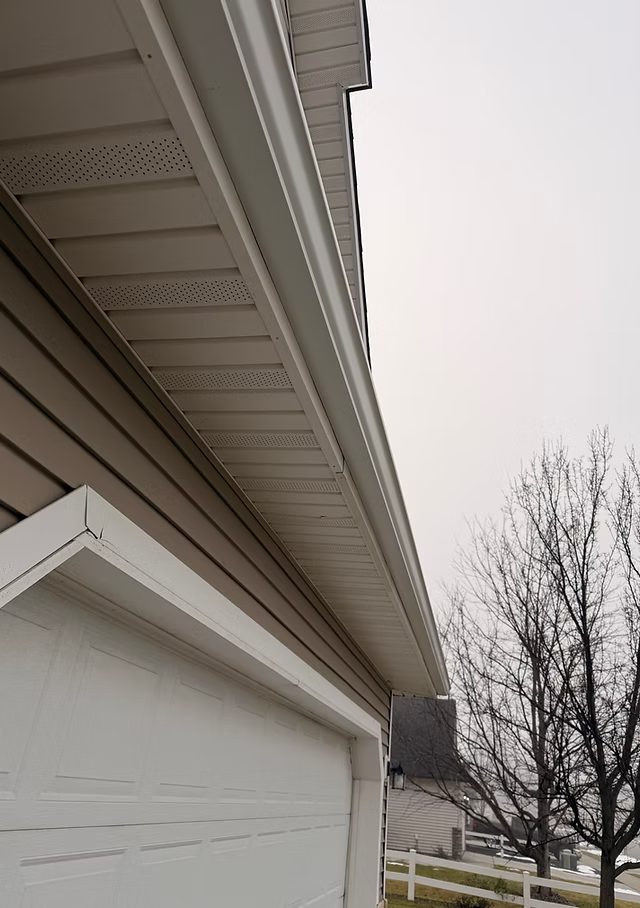
The K profile — flat back, decorative front that echoes crown molding — holds more water than a half-round of the same nominal size because the cross-section is closer to a rectangle. It also sits flat against fascia, which makes it simple to hang and simple to seal.
It's been the American standard since the 1950s, which means every accessory, guard and downspout on the market fits it.
Gauge matters more than size
Builder-grade aluminum is .019. What we hang is .027 or .032. That sounds like a small difference on paper and it is not one on a house — .032 holds a ladder lean, resists hail dimpling, and doesn't oil-can along a long run.
If a bid is meaningfully cheaper than everyone else's, gauge is usually where the money came out.
When 5-inch is enough
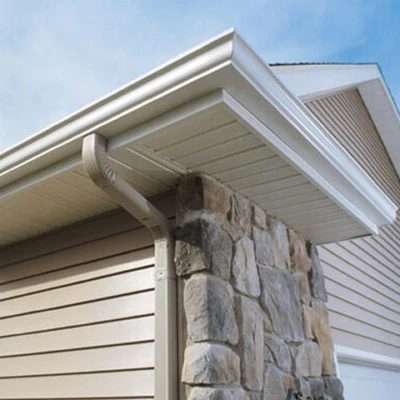
Roof pitch under about 6/12, roof planes under roughly 800 square feet feeding one run, and a downspout every 30 to 35 feet. That describes most ranches and a lot of two-stories in this metro.
Add a second downspout before you upsize the trough. It's cheaper and it usually solves the same problem.
Questions people ask
Is 5-inch gutter big enough?
For most St. Louis homes, yes. Steep pitches and wide roof planes are where it isn't.
What gauge aluminum should I get?
.027 minimum, .032 if you want it to shrug off ladders and hail. Avoid .019.
What's the difference between K-style and half-round?
K-style holds more water and costs less. Half-round suits historic homes and sheds debris better.
How much water does 5-inch hold?
Roughly 1.2 gallons per linear foot, though what matters more is how fast the downspouts can empty it.
Free estimate
We measure, we look at the fascia, and you get a number in writing.
Talk to a real St. Louis gutter company
Third generation, family-run since 1947. Somebody picks up, day or night.