
Soldered joints
Real copper work is soldered, not sealed with caulk. A soldered joint is a metallurgical bond — it doesn't have a service life the way a bead of sealant does.
That's skilled work and it's part of why copper costs what it costs. It's also why a soldered copper system can go decades without a service call.
Patina
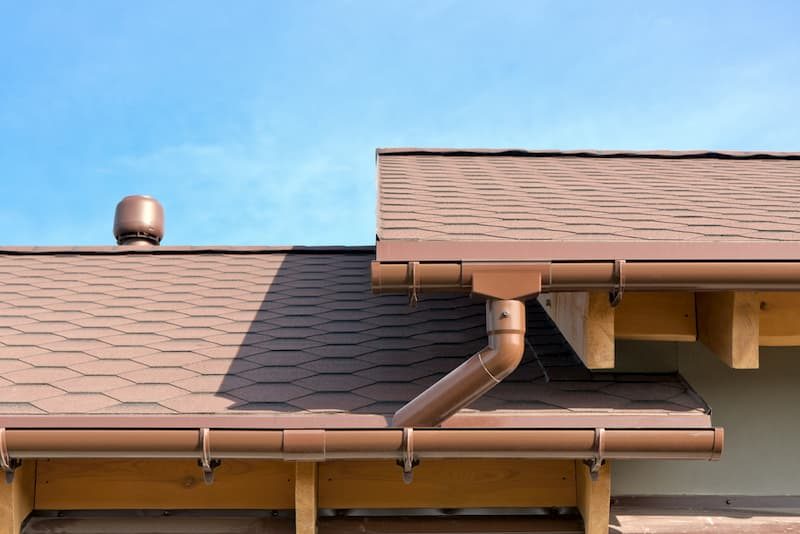
Copper goes from bright penny to a warm brown within a year or two, then slowly toward the green verdigris over decades in this climate. The green takes longer here than it does on a coast.
If you want it to stay bright, there are lacquered products, but they need renewing. Most people who choose copper choose it for the patina.
Fastener discipline
Copper and steel don't mix. A steel screw in a copper gutter sets up galvanic corrosion and eats the joint. We use copper or stainless throughout — hangers, straps, fasteners, all of it.
This is the single most common defect we find on copper somebody else repaired. One wrong screw undoes an expensive system.
Where it makes sense
Slate, tile or standing-seam roofs. Historic homes where the original was copper. Homes where the owner intends to be there long enough that a 25-year replacement cycle is a real cost.
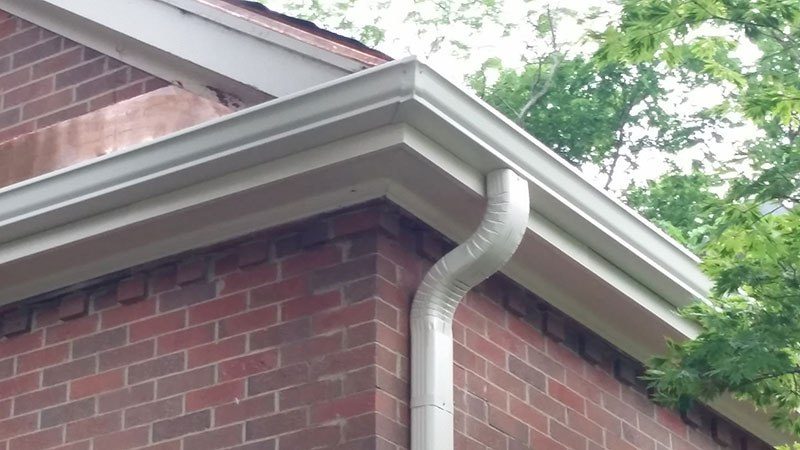
On a 1970s ranch with a 20-year architectural shingle roof, aluminum is the honest recommendation.
Questions people ask
How long do copper gutters last?
Sixty to a hundred years, and soldered systems routinely go longer.
How much more does copper cost?
Several times aluminum, depending on profile and complexity. It's a different tier, not a small upgrade.
Will copper turn green?
Brown within a year or two, green over decades in this climate. It's slower here than in a coastal environment.
Can copper be repaired?
Yes, and properly — a soldered patch on copper is a permanent repair, not a temporary one.
Free estimate
We measure, we look at the fascia, and you get a number in writing.
Talk to a real St. Louis gutter company
Third generation, family-run since 1947. Somebody picks up, day or night.