
Concrete moves with the dirt under it
A driveway is a four-inch slab sitting on whatever soil the builder left behind. Around here that's usually clay, and clay changes size with its moisture. Bone dry in August, it shrinks and opens cracks you can drop a coin into. Soaked in March, it swells.
Concrete can't flex with that. It tips.
When the soil under a slab gets wet and dries out evenly, the whole piece moves together and you barely notice. Trouble starts when one corner gets far more water than the rest, and a downspout aimed at the driveway apron is the most common way that happens.
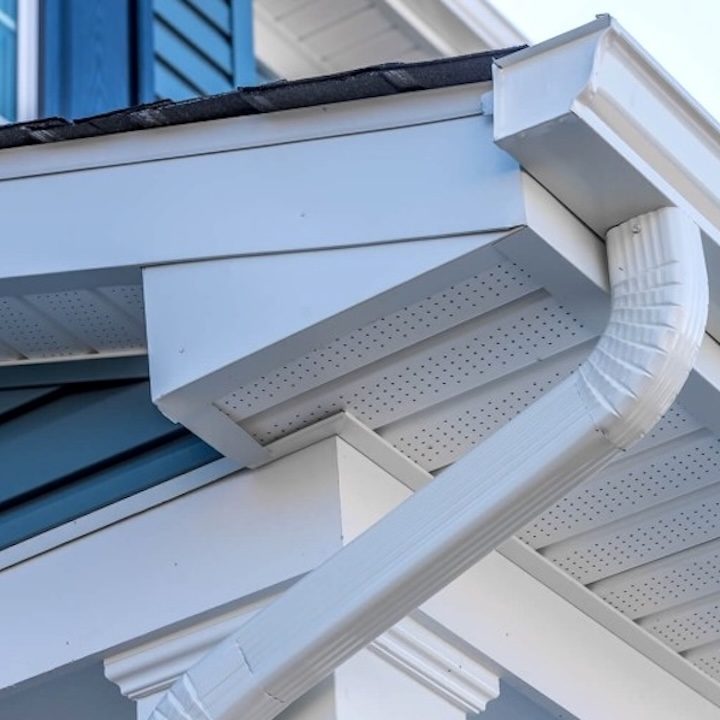
Winter lift at the garage apron
Water that soaks in near the garage door and then freezes forms ice in the soil, and the slab rides up on it. Our winters swing above and below freezing again and again, so the lift comes and goes, and each round loosens the ground a bit more.
Most people notice it because the overhead door stops sealing on one side or scrapes on cold mornings. By April the slab drops back. It rarely lands exactly where it started.
Sinking slabs and the hollow underneath
Settling is the opposite symptom with a related cause. Water running along the edge of a walk washes fine soil out from beneath it, a little every storm. Eventually there's a void, and the concrete cracks over it like a plank with nothing under the middle.
Tap a sunken section with a hammer handle. A hollow sound usually means the base has washed out, and the water has to be stopped before anyone pays to fix the slab.
Ice sheets where the downspout empties
A downspout draining across a sidewalk is a hazard even if the concrete never moves. Snow melts off a sunny roof in the afternoon, runs over the walk and freezes hard by dark. We see it most on the north side of a house, where that strip never gets direct sun.
Mail carriers, kids heading for the bus and anybody hauling groceries all cross it. Moving the discharge a few feet usually ends the problem.
Gutter spill above the driveway
Not all of this comes out of a downspout. A gutter that overflows above the garage drops a sheet of water straight onto the apron, and on plenty of attached garages a roof valley pours into that same short stretch of gutter. Oak tassels in May and leaves in October pack the outlet. The water goes over the front.
A line of pitting or a dark stripe across the driveway under the eave shows you where it's landing. Our page on a gutter overflowing in one spot walks through how we track that down.
Where the discharge should go instead
The aim is getting roof water onto ground that slopes away from both the house and the concrete. On a corner lot with a side yard, an extension that turns away from the drive may be all it takes. On a narrow south-city lot where the walk and the gangway eat up every inch, a buried solid line under the walk to an emitter in the front yard usually makes more sense.
Short runs can sometimes be pushed under an existing walk without cutting it. Our downspout installation crews can also move a downspout to the other end of a wall so it drops where the yard is lower.
New subdivisions and flat Metro East yards
Newer St. Charles County homes often have a downspout at the garage corner ending in a splash block a foot from the driveway. The builder graded the lot, but the drive sits at the low edge of that grade, so the water heads right for it.
Flat lots in the Metro East behave differently. Water doesn't run anywhere. It sits beside the slab and soaks in, so distance matters more than direction, and a longer buried run toward the back of the yard may be the only real fix.
Water at the slab, traced back to the roof
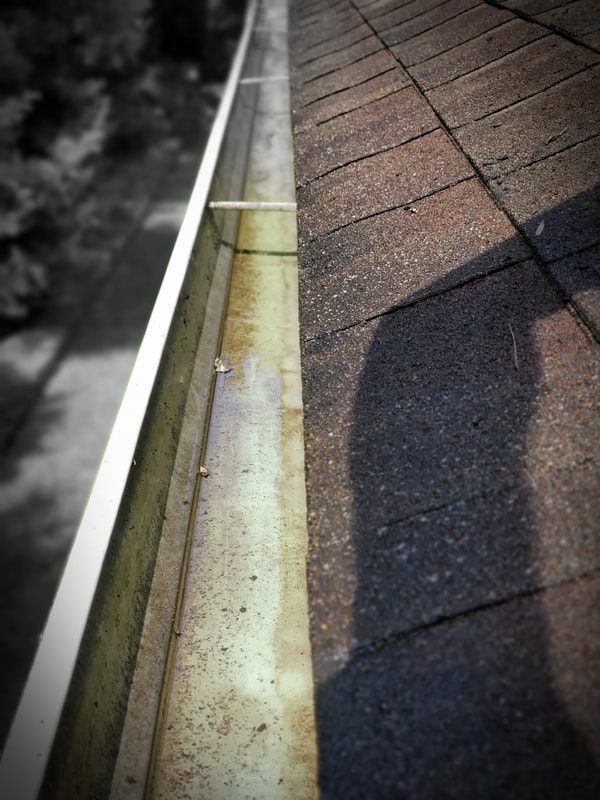
Concrete jobs we leave to others
Mudjacking, foam lifting or tearing out a heaved slab. That's flatwork, and a good concrete contractor will do it better than we would. We'll fix the water first so their work lasts.
Sealing the joint between the driveway and the garage floor. Worth doing, but it's backer rod and sealant on the concrete side, not a gutter repair.
Running a pipe out through the street curb. Some municipalities don't allow it, so check with your city before anybody digs toward the street.
Selling you a buried drain when the downspout only needs an elbow turned the other way.
Driveway and sidewalk drainage questions
Can a downspout really crack a driveway?
It can be the main cause. Concentrated water keeps one patch of clay wetter than the rest, which leads to uneven swelling, frost lift and washout under the slab. The concrete cracks where its support changes.
Should my downspout drain onto the driveway so it runs to the street?
Lots of houses are set up that way, and in mild weather it works. The cost shows up in winter as ice on the slab and water working into the joints and under the concrete. Lawn that slopes away is usually a better place for it.
My sidewalk lifted this winter. Will it go back down?
Often partway, once the ground thaws and dries out. It rarely returns to the same spot, and each wet winter can raise it a little more. Take the water away and the movement usually slows down.
Do you fix heaved or sunken concrete?
No. Lifting, leveling or replacing slabs is flatwork. We handle the gutter and downspout side so water stops reaching the concrete, and you can bring in a concrete contractor for the slab itself.
How do you get a downspout line past a sidewalk?
On short runs a pipe can sometimes be pushed under the walk. Otherwise we route around the end of the walk, or with your approval cut a narrow trench and leave the concrete patch to a flatwork crew.
Driveway drainage estimate
Tell us which slab is moving and where the nearest downspout lets out.
Keep roof water off your concrete with a St. Louis gutter company
John Beal Roofing has been family-run since 1947 and is in its third generation now. Somebody answers the phone around the clock. Our gutter work carries a lifetime workmanship warranty, estimates cost nothing, and the company holds a BBB A+ rating, Owens Corning Platinum Preferred status and a Roofing Contractor Magazine Top 100 listing.