
Our leaf drop happens twice, so the cleaning should too
Trees in this metro don't finish together. Silver maples start shedding in September and are mostly bare by the last week of October. Honey locusts throw their small leaflets around the same time, and those are the ones that slip through a coarse screen and pack the bottom of a trough like wet paper. Sweetgum balls come down with them in the older county subdivisions.
Then the oaks take over. Pin oaks and red oaks, which are everywhere in Webster Groves, Kirkwood, University City and the older Florissant streets, hang onto brown leaves long after the maples are done. A hard wind in mid-December strips a batch. Another one in January strips more. That trailing drop is exactly why a single early-November cleaning leaves people with a full gutter over the winter.
The schedule we run for most customers is straightforward. First pass in the first week or two of November, once the maples and locusts are down. Second pass in early to mid December, after the oaks have given up most of what they're going to give up before the first hard freeze.
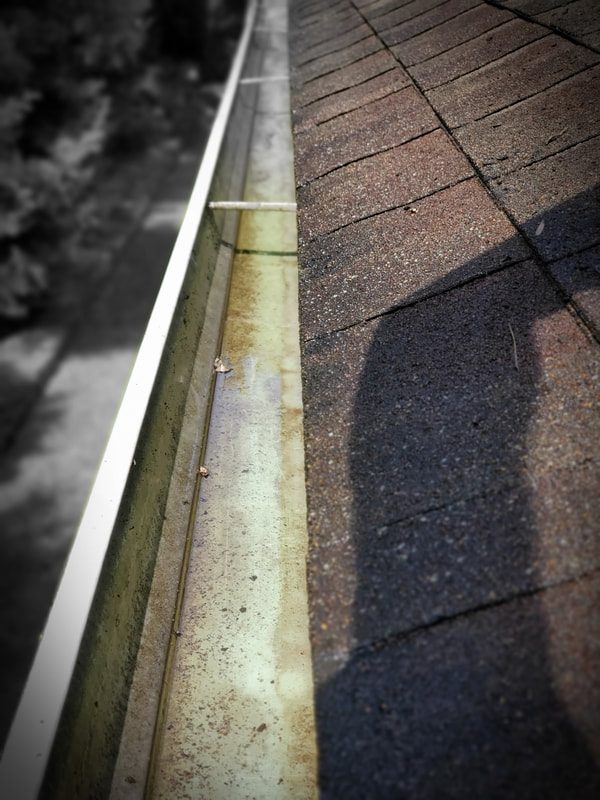
Why the second pass matters more than the first
A gutter packed with wet leaves going into a St. Louis winter isn't just a drainage problem. It's a weight problem and an ice problem. Soaked debris is heavy, and a fifty-foot run carrying that load all winter puts steady downward force on hangers that were sized for water.
Then it freezes. Water that can't move sits in the trough, turns to ice, and expands against the seams and the back seal. Come March, the leaks people find at their miters are often damage from ice that was sitting in a clogged run in January. A clean, empty gutter drains and refreezes without the same pressure.
The downspouts matter as much as the troughs here. A packed outlet at the top of a downspout means the whole run holds water even after the trough looks clear from a ladder. We flush every outlet and watch it run at the bottom, which is the only way to know the line is open. There's more on the winter side of this on our page about ice dams and gutters.
What a real cleaning includes, and what it doesn't
Debris comes out by hand into a bucket, not blown across the roof or flushed down the downspout to jam somewhere we can't see. Troughs get wiped down enough to see the bottom seam. Every outlet gets flushed and watched. We check hangers as we go, because a ladder pass is the cheapest inspection anybody is going to get on that run.
What comes back to you is a list. Nail heads standing out, a low spot holding water, a miter with a hairline open, a section of fascia that's darker than it should be. Some of those are worth fixing now and some can wait two years, and we say which is which.
What a cleaning isn't: it isn't a fix for a run that's the wrong size or hung wrong. If a trough overflows in a moderate rain the day after it's cleaned, the problem is capacity or pitch. Our page on overflowing gutters covers how to tell the difference.
The trees that decide your schedule
Pin oak over the back half of the roof means two passes, and probably a look in late January. The marcescent leaves, the brown ones that stay on the branch, come off in batches all winter and there's no clean end date.
Silver maple means an early pass and a serious one. Those trees drop volume, and the helicopter seeds in spring are a separate problem entirely. Honey locust means the fine stuff that defeats a basic screen. Pine means needles, which mat into a felt layer that water runs straight over.
A house with nothing but a small ornamental in the front yard may genuinely need one cleaning a year, and we'll say so. We'd rather write a smaller ticket than sell a route stop that isn't doing anything.
How the fall work usually breaks down
Standard cleaning
Hand-cleared troughs, flushed outlets, and a written note on what we found.
Learn moreGuards instead of passes
Micro-mesh for houses under heavy oak, once the run underneath is sized right.
Learn moreRepairs found on the ladder
Loose hangers, open miters and crushed downspouts fixed while we're up there.
Learn moreWinter drainage
Extensions and buried line so meltwater discharges away from the foundation.
Learn moreSoft fascia
Board that's been wet behind a packed gutter, found before it spreads.
Learn moreThe whole-year schedule
What we recommend in each season, not just autumn.
Learn more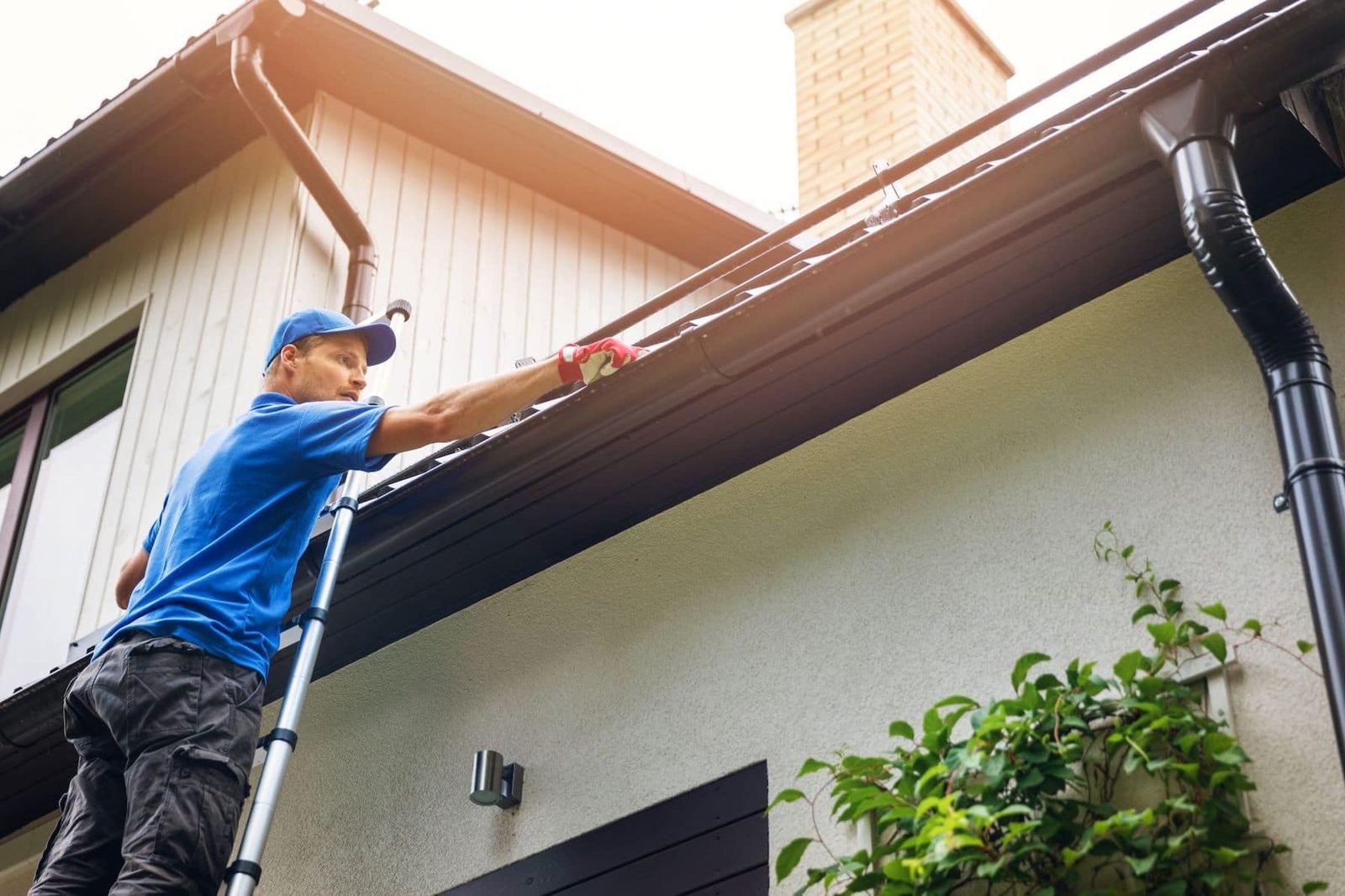
A few things we won't sell you in the fall
A guard install in late November on a run that already needs rehanging. Cold-weather mesh work on a failing gutter is money spent in the wrong order. Fix the hang in the spring, cover it after.
A pressure wash of the trough. High pressure drives debris into the outlet, forces water behind the back seal and can peel the finish. Hands and a bucket are slower and better.
A cleaning in the second week of October because the maples looked bad. Come back in three weeks and it'll need doing again. We'd rather schedule you once, properly.
Heat cable as a default. It helps on specific, documented problem runs and it does nothing for most houses. Attic insulation and ventilation fix more ice than cable does.
Fall Gutter Cleaning gutter questions
When should I book the first fall cleaning?
For most St. Louis houses, the first week or two of November. The maples, locusts and ash are down by then, and anything earlier means paying twice for the same trough.
Do I really need a second visit in December?
If you have pin or red oak over the roof, yes. Those trees hold leaves past Thanksgiving and release them all winter. Without oaks, one well-timed pass usually covers it.
What happens if we skip fall entirely and clean in the spring?
The run carries wet debris through every freeze, ice sits in the trough instead of draining, and the added weight works on the hangers all winter. Spring is when we get the calls about sagging runs and open miters.
Can guards replace fall cleaning altogether?
They replace the ladder work, not the maintenance. Stainless micro-mesh keeps oak tassels and leaves out and the run keeps draining, but the mesh itself wants a brush-off every couple of years under heavy canopy.
Do you clean gutters on two-story and three-story houses?
Yes. Height changes the setup and the price, not whether we'll do it. On tall south city and Central West End houses we plan the ladder placement at the estimate so nobody is improvising on a wet morning.
Cities we run fall routes in
Kirkwood · Webster Groves · Florissant · St. Charles · Ballwin · Edwardsville
Book a fall cleaning
Tell us what's over your roof and we'll tell you whether you need one pass or two.
Related timing and cleaning pages
Book the fall passes with a St. Louis gutter company
Family-run since 1947, third generation, BBB A+, and a live voice on the phone at any hour.