
Rot starts behind the trough, not in front of it
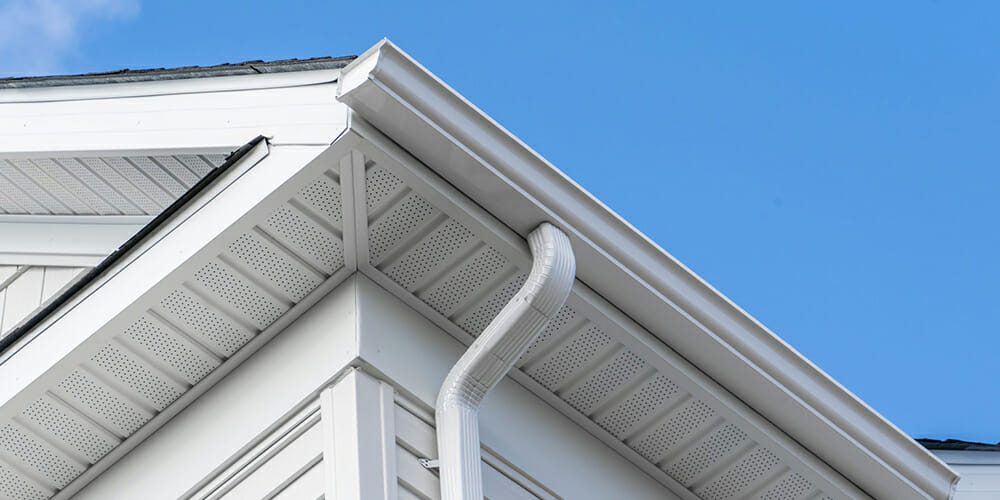
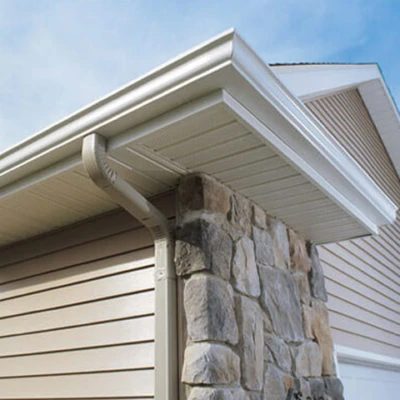
Stand in the yard and the gutter looks fine. Climb a ladder, push a screwdriver into the fascia a foot from a downspout outlet, and on plenty of Carondelet houses it sinks in to the handle. That's the pattern we find over and over down here: the metal outlasted the wood it was screwed to.
It happens because water got behind the gutter for years. A back edge sitting half an inch off the board, a missing drip edge, a trough that tipped forward after one hanger let go. Every rain wet the end grain. Every freeze opened it a little more, and paint hid all of it for a long time.
So the order of work matters. Rotten board comes out first, back to framing that's solid, and the new material gets primed or wrapped before anything hangs on it. Then the trough. Hanging new aluminum on soft fir is money you'll spend again in two winters, and we won't do it even when a homeowner asks us to skip the carpentry to trim the bill.
Where we'd push back
Wrapping rotten fascia in aluminum coil without replacing it first. It looks new for a year, then traps moisture against the wood, so the rot keeps going where nobody can see it.
Guards on a run with a bad back edge. A cover keeps leaves out and does nothing about water sneaking behind the trough, which is the real problem on these houses.
And a whole-house replacement when one elevation is the trouble. Older homes here often have one bad side, usually the one under the biggest tree or facing the weather. Fix that side and leave the rest if it's sound. Our page on why runs start to sag covers the hanger half of this.
Common Carondelet jobs
Streets that fall toward the river
A lot of Carondelet sits on ground that slopes. Some blocks tilt gently. Others drop hard enough that the back of a house stands a full story taller than the front, and roof water behaves differently on that kind of lot. Put a downspout out on the uphill side and the discharge runs right back along the foundation. Put it out downhill and it can cut a channel through the yard or land on the neighbor's steps.
The clay underneath makes it worse. St. Louis clay takes water slowly, so a heavy rain runs across the surface instead of soaking in, dragging mulch and topsoil with it. We read the grade before deciding where each downspout lands. Sometimes that means moving an outlet to the other end of a run. Sometimes it's a buried solid line out to daylight further down the slope.
We won't bury perforated corrugated pipe and call it drainage. It silts up in clay within a few years, and you can't clean it.
Old stock, odd sizes
Houses here span a long run of building eras, and the gutters show it. We find original 4-inch on narrow brick fronts, 5-inch K-style hung during a flip a few years ago, galvanized steel rusted through at the bottom seam, and now and then a built-in trough at the roof edge that somebody tarred over decades back.
Each one gets its own answer. Galvanized with rust holes at the seams is finished. Old 4-inch on a small, simple roof can stay if it's hung right. A tarred-over built-in trough needs a real look, because the tar usually hides rot in the wood box beneath it, and that's a bigger job than a hang-on gutter.
You'll know which category you're in before anybody talks about color.
Silver maple seeds and the spring cleaning
Wherever a silver maple hangs over the roof, April brings a drift of helicopter seeds that pile into the trough and sprout if they sit wet. A gutter full of seedlings is a gutter holding water against the fascia. That's the same wet board this whole page is about.
On a house with old wood, a cleaning right after the seeds drop does more good than one in the fall. We'd rather tell you that than sell you a guard you may not need.
Carondelet gutter questions
Can you match the look of our old gutter if we replace it?
Close, in most cases. Half-round, K-style and a range of stock colors are available, and we'll bring samples. We can't make new aluminum look a hundred years old, and we'd rather say that up front.
Is old galvanized steel gutter worth keeping?
Only if the bottom and the seams are still solid, and at this age that's rare. Once rust has opened a seam, sealant won't grip, and patching turns into a yearly chore.
How can I tell if my fascia is rotten without getting on a ladder?
Look for paint bubbling or peeling in a band just under the gutter, dark streaks on the board near the outlets, and a gutter line that waves instead of running straight. None of those proves rot. They're reasons to have somebody push a probe into the wood.
Does replacing fascia mean the roof has to come off?
Usually not. The fascia sits under the drip edge, and bad board can be cut out and new fitted without disturbing the shingles. If the rot runs up into the roof deck, that's a roofing conversation, and John Beal Roofing does that work as well.
Our backyard floods from the downspout on the high side. Can that be fixed?
Most of the time, yes. The fix is either moving the outlet so water starts on the downhill end of the run, or carrying it underground in solid pipe to a spot where it can leave safely. We'll walk both options with you on site.
Close to Carondelet
Free estimate in Carondelet
Let us know if the house sits on a slope and which side floods. That shapes the drainage plan.
A St. Louis gutter company that checks the wood first
Family-run since 1947 and now in its third generation. Free estimates, a lifetime workmanship warranty, and a live person on the phone at any hour.