
Name the sound before anyone gets a ladder
The sound tells you most of what you need to know, so notice when it happens. A slow plink that carries on for an hour after the storm is a drip. A hollow drumming that only shows up in heavy rain is water inside a downspout. Sharp ticks on a sunny morning or a cold evening are the metal moving. Banging when the wind picks up is something loose.
Stand outside the room where you hear it, during or right after a rain, and find the spot. It's nearly always within a few feet of a downspout, a corner or the end of a run.
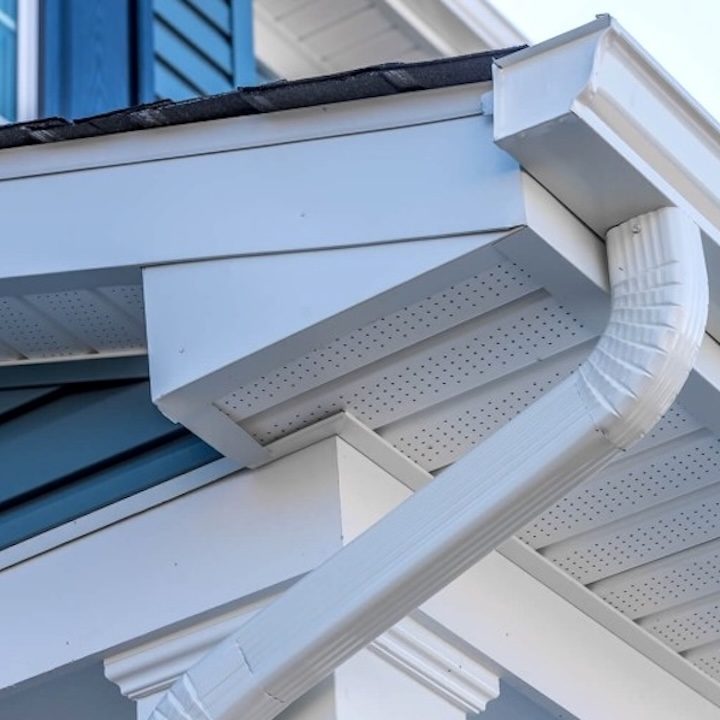
The plink that keeps going after the storm
A gutter should fall slightly toward its downspout, around a quarter inch over ten feet. When a hanger sags or the fascia behind it settles, a dip forms and holds a puddle. That puddle leaks out slowly through the nearest seam or end cap, one drop at a time, onto whatever sits below.
If what's below is a window well cover, an air conditioner or the lid of a bay window, you hear every drop. Re-pitching that section usually ends it. It's a small job next to the sleep it costs you.
A run that's dropping away from the house is a bigger version of the same problem, and our page on sagging gutters covers it.
Drumming inside the downspout
In a hard rain, water drops the full height of the downspout and slams into the elbow at the bottom. On a two-story house that's a long fall, and thin aluminum acts like a drum. A downspout on the wall outside a bedroom is the usual offender.
Rubber and foam inserts are sold to dampen it. Some help a little. The trouble is that anything sitting inside a downspout catches maple seeds and shingle grit, and a clogged downspout is a worse problem than a noisy one. Moving the downspout to a different corner, where the drainage allows, is the fix we trust more.
Ticks and pops when the weather turns
Aluminum grows and shrinks with temperature. A long run on a south wall moves a noticeable amount between a cold night and a sunny afternoon, and St. Louis swings through freeze and thaw dozens of times a winter. If the metal is pinned tight at a hanger screw or a corner, it creeps, then jumps. That's the tick.
It's mostly harmless. Loud ticking can mean hangers screwed down too hard, or a long run with no slack at the ends. We can back off fasteners or split a very long run with an expansion joint. We won't call it a defect when it isn't one.
Rattling and banging in the wind
A loose downspout strap, or a hanger that's pulled out of soft wood, lets the gutter shift with every gust. You'll hear it as a knock against the house, usually at night when everything else is quiet.
Thin metal makes it worse. Plenty of newer homes in St. Charles County were hung with .019 builder-grade aluminum, and that gauge flexes and buckles where heavier gutter won't. On those houses we re-secure first and only bring up replacement if the metal is already kinked or the fascia is soft. If the gutter is visibly leaning out, read gutter pulling away from the house.
Water landing on something hard
Sometimes the noise isn't the gutter at all. A short roof over a porch or bay window with no gutter of its own drips straight onto a metal awning, a deck or the AC unit. A downspout that empties onto a concrete pad sounds like a faucet left on.
A small gutter on that roof section, a splash block, or an extension that carries the water out to the lawn usually solves it. Our downspout drainage page shows the outlet options.
Other drips worth chasing
Where we'd save you the money
A whole new gutter system to stop a tick. Expansion noise follows aluminum wherever it goes. New gutters tick too.
Heat cable to quiet winter dripping. It's a different tool for a different job, and it won't fix a pitch problem.
Foam or rags stuffed into a downspout. They quiet it right up until they back the whole gutter up into the fascia.
Most of the time, a St. Louis gutter company can quiet a noisy run in one visit by finding the one spot that's wrong and leaving the rest alone.
Gutter noise questions
Why do my gutters drip loudly after the rain has stopped?
Water is sitting in a low spot and draining out slowly through a seam or end cap. The gutter has lost its slope toward the downspout. Re-pitching that section usually stops the dripping by the next rain.
How do I stop a downspout from making a drumming sound?
Moving it off a bedroom wall is the most reliable fix. Inserts that soften the impact exist, but anything inside a downspout can catch debris and clog it, so we use them carefully if at all.
Is ticking in my gutters on cold nights a problem?
Usually not. It's aluminum expanding and contracting against its fasteners. If it's very loud, the hangers may be overtightened or a long run may need an expansion joint.
Why do my gutters bang when it's windy?
Something is loose: a downspout strap, a hanger pulling out of soft fascia, or a section that's lost a fastener. Re-securing it is a short repair unless the wood behind it has rotted.
Will thicker gutters be quieter?
Heavier aluminum flexes less, so it rattles and oil-cans less in wind. It won't change drip noise or downspout drumming, and it still expands with heat. We'd only suggest it if the existing gutter is thin and already damaged.
Describe what you're hearing
When it happens (during rain, after rain, cold nights or wind) and which room you hear it from.
Quiet gutters from a local St. Louis gutter contractor
John Beal Roofing has been family-run since 1947 and is on its third generation now. BBB A+ rated and an Owens Corning Platinum Preferred contractor. Our repairs carry a lifetime workmanship warranty. Free estimates, and the phone gets answered live around the clock.