
Over the top or through the joint
Two different problems look alike from the patio. One is water overflowing at the corner because too much arrives there at once. The other is water leaking out through the joint itself.
Wait for a dry day and run a hose into the gutter a few feet from the corner. Keep the flow gentle, well below the lip. If the corner drips anyway, it's the joint. If it only goes wrong in a downpour and the water comes over the front edge, you're looking at an overflow problem, and our gutter overflowing in one spot page is the better read.
A drip that keeps going for a day or two after the rain has stopped is another tell. That's water trapped in the corner leaking out slowly through a cracked seal.
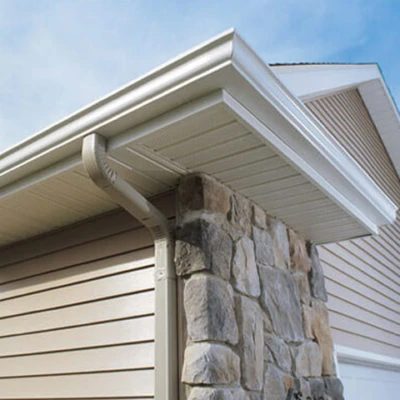
Why corners are the weak link
A run formed on site comes off the machine as one piece, end to end. No joints along the straight. But a run can't bend around the house, so at every corner two pieces get cut, fitted together and fastened. That's a joint, and every joint depends on sealant.
Aluminum moves with temperature. A long run on a south-facing wall grows on a July afternoon and shrinks on a January night. All that movement gets pushed into the corners, where it works against the sealant year after year. Eventually the bead lets go at one edge, and water finds the gap.
Strip miters and box miters
There are two common ways to build a corner. A strip miter is made by cutting both gutter ends at an angle and joining them with a narrow strip of metal riveted across the bottom seam. It's quick to make on site. It also has a long seam running right where water sits.
A box miter is a factory-formed corner piece that the two runs slide into. The seams sit up on the sides of the corner, not along its floor, so standing water has less to work on. We generally prefer box miters on replacement corners for that reason. They cost a little more, and on a corner that's never given trouble there's no reason to swap one out.
Rivets that have worked loose
Sealant isn't the only thing holding a corner together. Rivets or short screws lock the two pieces to each other. When a rivet loosens, the pieces shift a hair every time the metal expands, and that shifting tears the seal from the inside.
You'll sometimes see it as a rust-colored streak or a dark stain spreading from one rivet head. Before resealing, we drill out any loose rivet and set a new one, so the joint is tight again before fresh sealant goes on.
What a proper reseal involves
Squeezing new sealant over old sealant is the most common corner repair in St. Louis, and it rarely lasts. The new bead sticks to the old one, not to the metal, and the old one is what failed.
Done right, the corner gets scraped down to bare aluminum. Every bit of old sealant comes out. The metal is cleaned and dried, loose rivets are replaced, and a gutter-grade sealant goes in along the inside seam where water actually sits. It's slower. It holds.
Our page on leaking gutter seams covers end caps and joints along the run, which follow the same idea.
Old south city corners
On century-old brick two-stories around south city, the gutters are often small 4-inch troughs, and the corners have been patched more times than anyone remembers. We find layers of tar, roofing cement and three colors of caulk stacked on one joint. There's no clean metal left to seal to.
Those corners get replaced. On a short run it can make sense to replace the run itself. On a house where the rest of the gutter is sound, a new corner piece spliced in does the job.
Bent by a ladder, split by ice
Corners are where people lean ladders, because it feels sturdy. On thinner gutter it isn't. A bent corner opens its seams the same day. Ice is the other culprit: water trapped in a corner that won't drain freezes and pushes the joint apart from inside. Either way, a corner that's physically deformed won't seal, and we'll replace it rather than fill the gap.
Connected repairs
Wet board under the corner
When drips run down the fascia instead of falling clear.
Water behind the gutter →Fewer joints to fail
Why one-piece runs leak less than snap-together sections.
Seamless gutters vs sectional →Rot behind a corner
Rebuilding the wood after a long-running corner leak.
Soffit and fascia →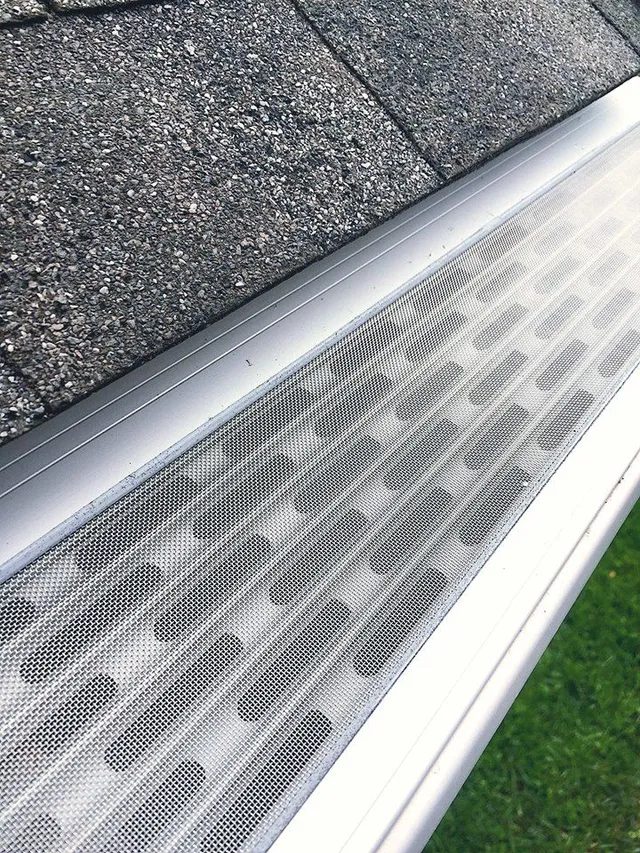
What one leaky corner doesn't need
New gutters on the whole house. One dripping corner is a repair, and if the runs are straight and the metal is sound, that's what we'll quote.
Another tube of caulk on top of the last tube. We'd rather leave it alone than add a layer that buys a month.
A guard to hide the problem. Guards keep leaves out of a corner, which helps it drain, but they won't stop a joint that's already open.
Gutter corner questions
Why does a gutter corner leak when each run is one piece?
The runs are one piece, but corners can't be. Each corner is two pieces joined with rivets and sealant, so it's the one place on a continuous gutter that can open up.
How long should a resealed gutter corner last?
It depends almost entirely on the prep. A corner scraped to bare metal, re-riveted and sealed on a dry day should go many seasons. A fresh bead over old caulk often fails within one.
Is a box miter better than a strip miter?
For a replacement corner, we usually think so. Its seams sit up on the sides instead of along the bottom where water pools. A strip miter that isn't leaking doesn't need to be swapped.
Can I reseal a dripping gutter corner myself?
If you're comfortable on a ladder, yes. Scrape out every bit of old sealant, clean the metal, let it dry fully and use a sealant made for gutters. Don't lean the ladder on the corner while you work.
Why does the corner keep dripping a day after the rain?
Water is trapped in the corner, often behind debris or in a slight dip, and it's leaking out slowly through a crack in the seal. Clearing the corner and resealing it usually stops both.
Point us to the leaky corner
Tell us whether it drips during rain, after rain, or both, and if anyone has patched that corner before.
Corner leaks fixed by a St. Louis gutter contractor
Third-generation and family-run since 1947, BBB A+, Roofing Contractor Magazine Top 100, with a lifetime workmanship warranty. Free estimates. Live answering 24/7.