
What it looks like outside and in
Streaks run down the face of the board below the gutter, not just down the gutter's outer face. Paint bubbles or flakes off the fascia. In a rain, drips fall in a neat line between the gutter and the house, right under its back edge.
Inside, the signs show up later. Stained soffit vents, water marks at the top of a basement wall right below an eave, a damp patch in the attic along the outside wall. Those mean it's been happening for a while.
Go out during a steady rain with a flashlight. Shine it into the gap between the gutter and the board. Water there is getting past the shingles.
Drip edge, or no drip edge
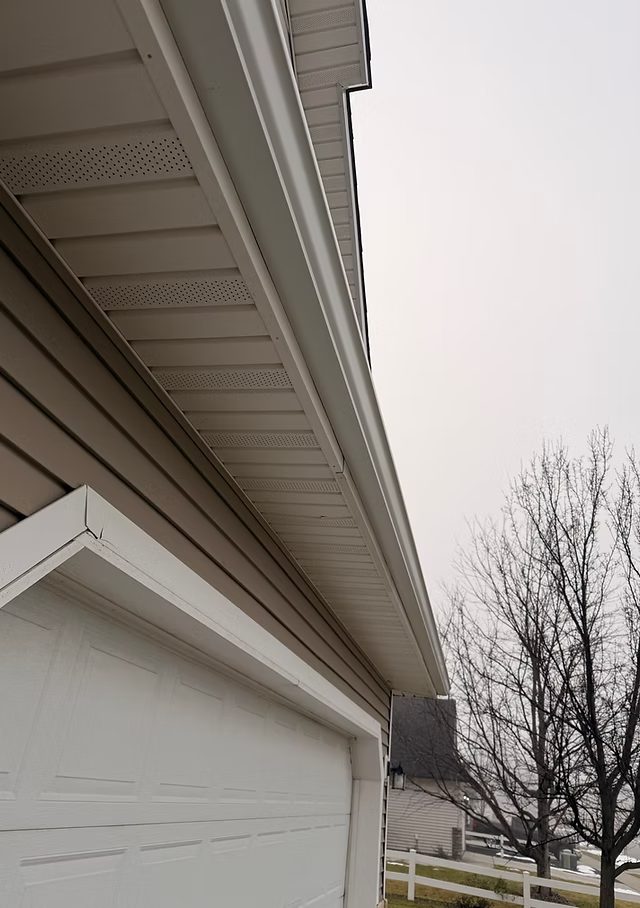
Drip edge is the bent metal strip along the roof edge whose lower leg hangs past the fascia and kicks water outward. Plenty of older St. Louis roofs never got any. Some newer roofs have a plain L-shaped edge that ends before it reaches the gutter.
Water clings. It'll follow the underside of a shingle and wrap right back onto the board. Gutter apron closes that path: a wider flashing that tucks under the first course of shingles and drops down inside the back of the trough. On a roof that's otherwise in good shape, adding apron is a smaller job than most people expect.
Hung an inch too low
The back of a gutter should sit high enough that roof water lands in the middle of the trough. Hang it an inch or two low, which happens when an installer follows the bottom of the fascia instead of the roofline, and water skips over the back edge in a light rain and over the front in a hard one.
You can sometimes spot it from the driveway as a visible gap between the shingle edge and the back of the gutter. The fix is rehanging at the right height, usually with apron flashing bridging what's left of the gap.
A seam leaking on the hidden side
Not every wet board is a roof-edge problem. A failed seam or a corner miter can drip on the back side of the gutter, where nobody sees it from the yard. The water runs down the fascia and looks exactly like an edge leak.
So before we blame the roof, we look inside every corner and joint on the wet stretch. Cracked sealant gets cut out and redone. Our leaking gutter seams page goes through how we reseal them.
Newer houses get it too
Fresh construction isn't immune. On some recent St. Charles County builds the shingles were cut flush with the deck edge, and the builder-grade gutter was screwed to the bottom half of the fascia because that's where the board was straightest. Water has a half-inch gap to fall through, and it does.
On those houses we usually leave the roof alone. A strip of apron and a rehang at the proper height fix most of it. If the trough is the thin stuff and already dented, we'll show you what replacing it would involve, but we won't insist on it. Plenty of thin gutter drains fine once it's hung right.
Winter ice at the overhang
Snow melts over the warm part of a St. Louis roof and freezes again at the cold overhang. That ridge of ice backs water up under the shingles and down behind the gutter. A trough packed with frozen leaves makes it worse. Gutter work alone won't solve it. Attic insulation and ventilation usually do, and our ice dams and gutters page explains why.
Rot that's already underway
By the time paint peels, the wood under it may already be soft. We test with a screwdriver at several points along the run. Firm wood gets dried out and then primed and painted, or wrapped in aluminum. Soft wood gets cut out and replaced before the gutter goes back up. The rotted fascia board page covers what that repair involves.
If the gutter has started to drop where the wood went bad, our page on a gutter pulling away from the house picks up that side of the story.
What we won't sell for this
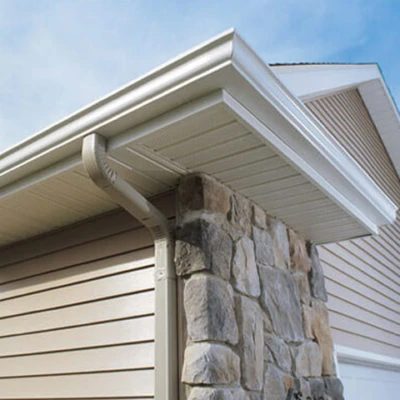
We won't sell new gutters as the cure for water behind the old ones. If the leak comes off the roof edge, a brand-new gutter hung the same way leaks the same way.
We won't sell a whole roof to fix a missing strip of flashing either. John Beal Roofing is an Owens Corning Platinum Preferred roofer, and we'll still tell you when your shingles have years left.
And caulk smeared along the top of the gutter against the board isn't a fix. It holds water against the wood and speeds the rot up.
Questions about water behind gutters
Why is the fascia wet when the gutter isn't overflowing?
Water is getting behind the gutter at the roof edge, or a seam is leaking on the back side. Both put water on the board without anything spilling over the front.
What's the difference between drip edge and gutter apron?
Drip edge is a narrow metal edge along the roof that throws water clear of the deck. Gutter apron is a longer flashing that reaches down inside the gutter. Where water keeps finding the fascia, apron usually works better.
Can flashing be added without replacing the roof?
Often, yes. The first course of shingles can be lifted with care and apron slid underneath. If the shingles are brittle and crack when lifted, we'll tell you before going any further.
Should we caulk the gap between the gutter and the fascia?
No. Sealant there traps moisture against the wood. Fix the path the water takes instead, and the gap stays dry by itself.
Is peeling paint on the fascia always a sign of rot?
No. Sometimes it's only moisture under the paint. A screwdriver settles it. Firm wood can be dried, primed and painted or covered.
Have a fascia leak traced
Tell us where you see the drips or stains and whether it happens in light rain or only heavy storms.
A St. Louis gutter contractor that finds the leak first
Family-run since 1947 and in our third generation, BBB A+, with a lifetime workmanship warranty. Free estimates, and a live person answers 24/7.