
Few ladder days, lots of looking
Most months on this list are a look, not a job. You stand in the yard during a steady rain, or right after one, and watch where the water goes. That habit catches more trouble than any ladder trip does.
The months that matter are set by what your trees drop. Your yard writes the calendar. A house with one ornamental pear out front can skip half of this. A lot under three pin oaks can't skip any of it.
Not a ladder person? Fine. Hand off the cleaning months and keep the looking months for yourself. They're free.

The year, one month at a time
January: watch, don't climb
After a snow, look at the eaves on a sunny afternoon. A few icicles are normal. A thick curtain along the whole front edge, or ice building up over the bottom row of shingles, usually means attic heat is melting snow that then refreezes at the cold overhang. Our ice dams page explains the attic side. Don't chip ice out of a gutter. You'll dent the metal and tear shingles long before the ice lets go.
February: note the drips
Late winter here swings above and below freezing over and over, and every swing works at the joints. When it rains on a mild day, put a coat on and look at the corners and end caps. A drip that shows up in February is a seam starting to fail. Write down which corner. That's a spring repair, not an emergency.
March: sight down every run
Once the ice is gone, walk the house and sight along each gutter like a board you're checking for straightness. It should look flat with a slight fall toward the downspouts. A belly in the middle, or an end dipping low, means a hanger gave up under the snow. Check the downspout extensions too. Mowers, kids and frost heave knock them loose all winter.
April: the first hard rains
Spring storms bring the first real test. During one, watch for water sheeting over the front lip. Overflow in one spot usually means a clog in the outlet below it. Overflow along the whole run means the gutter is undersized or pitched backward. Make sure every splash block and extension points downhill and away from the foundation, because our clay soil holds water right against the basement wall.
May: cleaning number one
Oak tassels come down in May, and silver maples drop their seeds in roughly the same weeks. Together they make a wet, stringy mat that blocks outlets faster than fall leaves ever do. Clean after the tassels stop falling, not before, or you'll be doing it twice. Run a hose down each downspout and listen for a clear rush at the bottom.
June through August: after every big storm
Summer storms here bring wind and sometimes hail. Once one passes, look for dents along the front lip, hangers pulled out of the board, and downspouts bent at the elbow. A dented gutter often still drains. Hail that dented the gutter has often bruised the shingles too, so look up as well. Our summer storm page covers what to photograph.
September: scoop the acorns
Acorns start falling in September and roll straight into the trough. They won't clog a gutter alone. They settle in the outlet, though, and become the dam that the first fall leaves pile against. A quick scoop at each outlet now makes November easier. September is also a smart month to book any fall repair before the leaf rush fills the schedule.
October: decide on one cleaning or two
Some trees let go early. Walnuts, locusts and a few maples can fill a gutter by mid-October. If yours are bare by Halloween, clean now and plan a light second pass. If your oaks are still green and full, wait and do one thorough cleaning in late November.
November: cleaning number two
Most leaves are down by the last week of November. This cleaning matters more than any other, because whatever's left in the gutter freezes in place and stays there until March. Clear the troughs, flush the downspouts, and check that every buried drain line still pops open at its outlet. A frozen pile of leaves at the end of a pipe backs water right up into the gutter.
December: last look before the freeze
Pin oaks hold some leaves well into winter. After the first hard freeze, glance at the outlets and clear any late pile on a mild afternoon. Then leave the gutters alone until spring. Our winter prep page has the rest of the cold-weather list.
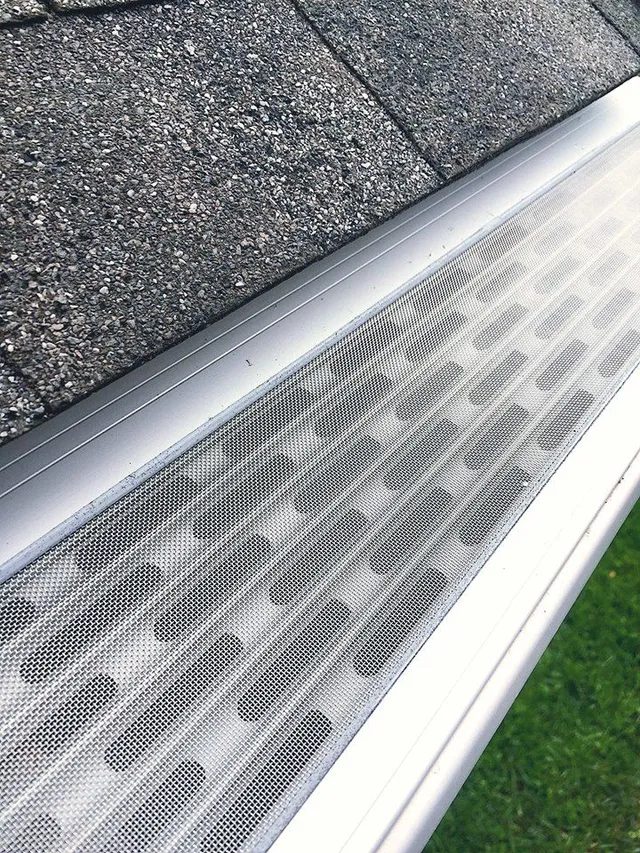
Where guards change the schedule
Good guards turn the May and November jobs into a look and a rinse. They don't erase the calendar. Oak tassels lie on top of micro-mesh until a rain washes them off, and some springs they need a soft brush.
We won't sell guards on a single-story house with one small tree. Cleaning that yourself costs nothing, and the guards would take years to earn their price. Under big oaks on a two-story, the math flips. Our gutter guards page lays out the types.
We also won't push a cleaning plan you don't need. Plenty of houses do fine on the two cleanings above and nothing more.
Checklist questions
Is cleaning gutters once a year enough in St. Louis?
For a house with few trees, often yes, as long as it happens in late November. Under oaks or maples, once a year leaves the spring mat of tassels and seeds sitting in the gutter all summer.
Why clean in May if the gutters were cleaned in the fall?
Spring brings a different load. Oak tassels and maple seeds pack the outlets tighter than leaves do. Skip May and the summer storms find a clogged gutter.
Should we break up ice in the gutters during winter?
No. Chipping or prying ice dents the gutter and can tear shingles. If ice keeps forming at the eaves, the fix is usually in the attic, not the gutter.
What should we watch for during a rainstorm?
Water spilling over the front, drips at corners and end caps, and downspouts that gurgle without flowing. Each one points to a different fix, so note where you saw it.
Do gutter guards mean we can skip this checklist?
They shorten it. The looking months stay the same, and the spring and fall cleanings become a quick check and a rinse instead of a full scoop.
Book a cleaning or a look
Tell us which months give you trouble and what trees hang over the roof.
Hand the ladder months to a St. Louis gutter company
John Beal Roofing has been family-run since 1947 and holds a BBB A+ rating. Estimates are free, and our phones are answered by a live person around the clock.