
Two roofs, two sets of gutters
Most two-flats in Shaw have a main roof that drains to the front or sides and a lower, flatter roof over the back porches. Owners tend to watch the front gutter because it's the one the neighbors see. The back one is usually the problem.
Porch roofs here are low-slope, so water crosses them slowly and carries whatever the tree dropped. It all lands in a short gutter with one outlet, often hung on a rafter tail or a fascia board that's been painted over a dozen times. When that outlet plugs, the overflow runs straight down onto the porch stairs. In January that's a sheet of ice where your upstairs tenant walks.
We look at both roofs on every Shaw estimate, even if you only called about one. It takes ten extra minutes.
The 4-inch gutter problem
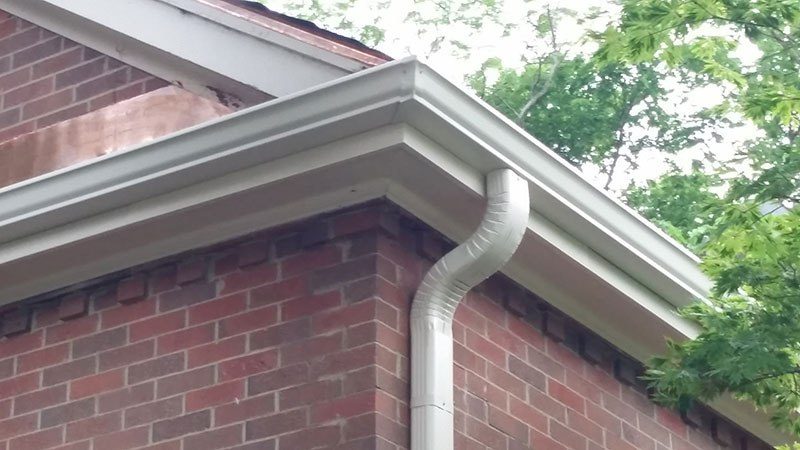
A lot of the original gutter on these houses was 4-inch, and plenty of the replacement gutter hung since then copied that size because it fit the old brackets. Four-inch was fine for an ordinary rain. It struggles in the summer cloudbursts St. Louis gets several times a year, when the trough fills faster than one outlet can drain it.
Moving to 5-inch K-style is the usual fix on the main roof. On a tall front with a big roof face, 6-inch with a 3x4 downspout is worth talking about, and our gutter sizing guide shows how we decide. Bigger isn't automatically better. Oversized gutter on a narrow brick front can look clumsy, and some owners would rather keep the slimmer profile and add a second drop.
Alley access and tight gangways
Shaw lots are narrow. The gap between two houses can be a few feet, with a gangway, a fence and somebody's air conditioner in it. Long ladders don't swing around in a space like that.
So we usually stage the back half of the job from the alley. If your garage sits on the alley line, its gutter is often the easiest thing on the property to reach and the most ignored. Garage gutter in this part of town tends to be leftover sections, sometimes with no downspout at all, and the water comes off the roof straight onto the slab edge.
We'll price the garage on its own line so you can decide. If the budget only stretches to one, do the house.
Fences matter too. Plenty of yards here have a wrought iron or wood fence tight to the house, and the downspout ends right behind it. When we reroute a drop, we look for a spot where it can empty without running under the fence and across a neighbor's walk.
Water that never leaves the foundation
Older Shaw downspouts often run into a clay tile pipe at the base of the wall. That tile was meant to carry roof water off to the sewer. A hundred years later many of those connections are cracked, packed with roots, or simply gone, and the downspout is pouring roof water into the soil right against the basement.
St. Louis clay soil makes it worse. It holds water and swells, then shrinks when it dries out, and that cycle leans on old stone and brick foundations every year. If the basement gets damp after a storm and at no other time, look at the downspouts before you call a waterproofer.
Our fix is usually plain: cut the downspout above the tile, cap the tile, and add an extension or a run of solid pipe that carries water well out into the yard. Rebuilding a buried tile line is a plumber's job with a sewer camera, and we'll tell you that rather than guess at it. Our downspout drainage options page lays out the choices.
Park trees and a lot of canopy
Shaw has a lot of mature trees, and Tower Grove Park sits along its south edge. In May the oaks drop tassels that mat into a felt across the bottom of the trough. September brings acorns, then leaves. Silver maples, where they've hung on, add a spring wave of helicopter seeds that will sprout in any gutter that stays wet long enough.
Two cleanings a year handles most houses here. A mesh cover can cut that back, but on 4-inch gutter we'd upsize first. A guard on gutter that's already too small just hides the real trouble.
Related gutter work
What we won't do on a Shaw house
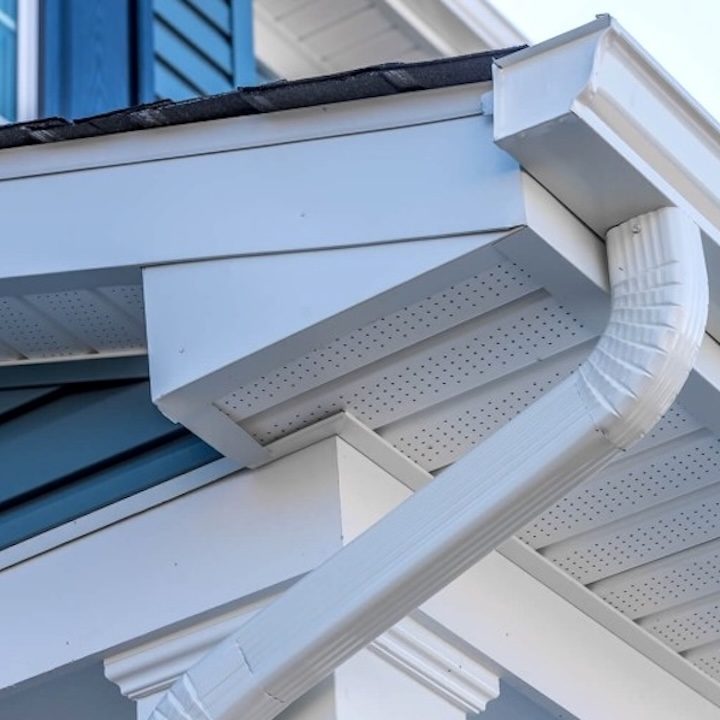
We won't hang vinyl. It cracks in a hard freeze and looks wrong on brick this old.
We won't spike new gutter into a fascia that's gone soft. Spikes in punky wood back out within a season or two, the run sags, and you've paid twice. If the board is rotten, you'll see it with your own eyes, get a price for the wood, and make the call.
And we won't talk you into tearing out a sound copper or half-round section just because it's old. A few houses here still have one. If the metal is solid, it gets repaired.
Shaw gutter questions
We own a two-flat and rent the upstairs. Can you work around tenants?
Yes. We need the back porches and the gangway clear, and that's about it. Give your tenants a heads-up the day before and we'll keep the stairs passable while we work.
Do porch-roof gutters need their own downspout?
They should have one. A lot of porch gutters here drain into the main downspout through a short connector, and that joint leaks more than anything else on the back of the house. A separate drop is cleaner.
Can the gutter color match our painted trim?
Usually. Aluminum gutter comes in a long list of factory colors and we'll hold samples against the trim on site. If your trim is a custom mix, we'll get as close as stock allows and tell you honestly how close that is.
Our downspout goes into a pipe in the ground. Should we leave it?
Run a garden hose down it first. If water backs up at the bottom, the pipe is blocked or broken and it's hurting you. If it swallows the water freely, it may be fine to keep.
How long does a gutter job on a two-flat take?
Most can be done in a day for the main roof and the porch roof together. Rotten fascia or adding the garage can stretch it. You'll get a realistic time frame along with the price.
More south side neighborhoods
Free estimate in Shaw
Tell us if it's a two-flat and whether the back porch roof has its own gutter.
A St. Louis gutter company that checks the back porch too
Third-generation and family-run since 1947, BBB A+, with a lifetime workmanship warranty. Call any hour and a person answers.