
The bottleneck is usually the downspout
A five-inch K-style gutter holds a surprising amount of water. Where most systems lose a hard storm isn't the trough. It's the hole in the bottom where the water has to leave.
When rain falls faster than the outlet can take it, the gutter fills and spills over the front edge, usually right beside the downspout. People assume the gutter is too small. Often the gutter's fine and the drop is undersized or half-plugged.
That's why downspout size deserves its own line on your quote.
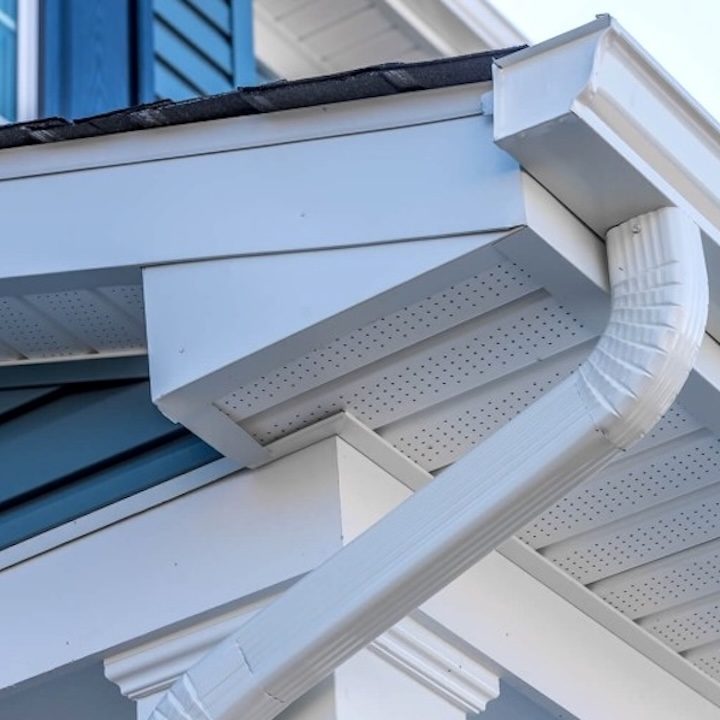
Twice the opening, not a little more
The numbers look close. Two by three, three by four. But the cross-section of a 3x4 is about double the 2x3, and the outlet hole cut into the gutter grows with it.
Double the opening means water leaves faster in a downpour and debris has more room to pass. A clump of wet leaves that wedges in a 2x3 elbow will often slide right through a 3x4. Around here that second point matters more than the first.
Oak tassels, maple seeds and the elbow
In May the pin oaks drop tassels, those stringy brown catkins that mat together the second they get wet. A few weeks later the silver maples let go of their helicopter seeds. Fall brings leaves and acorns.
Most of it washes toward the outlet and the first elbow below it, where the downspout bends back toward the wall. In a 2x3, that elbow is where clogs live. We see it on every street with mature trees. A bigger downspout won't stop the debris, but it chokes far less often. When it does, our page on a downspout not draining covers clearing it.
Where 2x3 still makes sense
We aren't going to tell you every downspout needs upsizing. On a small porch roof, a detached garage with short runs and no trees, or a shed, a 2x3 handles the water fine.
It's also slimmer on the wall. On some historic brick fronts a big rectangular drop looks heavy, and a smaller one, or a round downspout paired with half-round gutter, suits the house better. Function comes first, but looks count.
Six-inch gutters need the bigger drop
Pairing a six-inch gutter with 2x3 downspouts mostly wastes the bigger gutter. You've built a wide channel and then drained it through a narrow pipe. Six-inch systems are normally paired with 3x4, and long runs often get more than one.
If you're moving up to six-inch because of overflow, talk about downspout count and size in the same conversation. Sometimes adding one outlet partway down a long run fixes the overflow without changing the gutter at all. Our gutter sizing guide goes deeper on the trough itself.
Buried lines and the size at the bottom
Plenty of St. Louis houses have downspouts that dive into a buried pipe. If that pipe is a three- or four-inch round line, a 3x4 feeds it through an adapter. Running a big downspout into a small or crushed underground line just moves the clog below the lawn.
Our clay soil makes this worse. Water that can't get away stays near the foundation, and clay swells when it's wet. Check where the downspout goes before you upsize it. Downspout drainage solutions covers extensions, buried lines and pop-up emitters.
Changing an existing downspout
Swapping 2x3 drops for 3x4 means a larger outlet cut in the gutter, new elbows, new pipe and new straps. It isn't a slip-on fix, but it isn't a gutter replacement either. On many houses we change only the drops at inside corners and long runs and leave the small ones alone.
If the gutter itself is tired, it's usually smarter to do both at once. If the gutter's good, we'll just change the downspouts.
Keep following the water
Spilling at one spot
Overflow beside a downspout often points at the outlet.
Gutter overflowing in one spot →The corner above the drop
Valley water hits the miter before the downspout.
Gutter miters and corners →Where the water lands
A bigger drop puts more water on the ground at once.
Mulch washout by downspouts →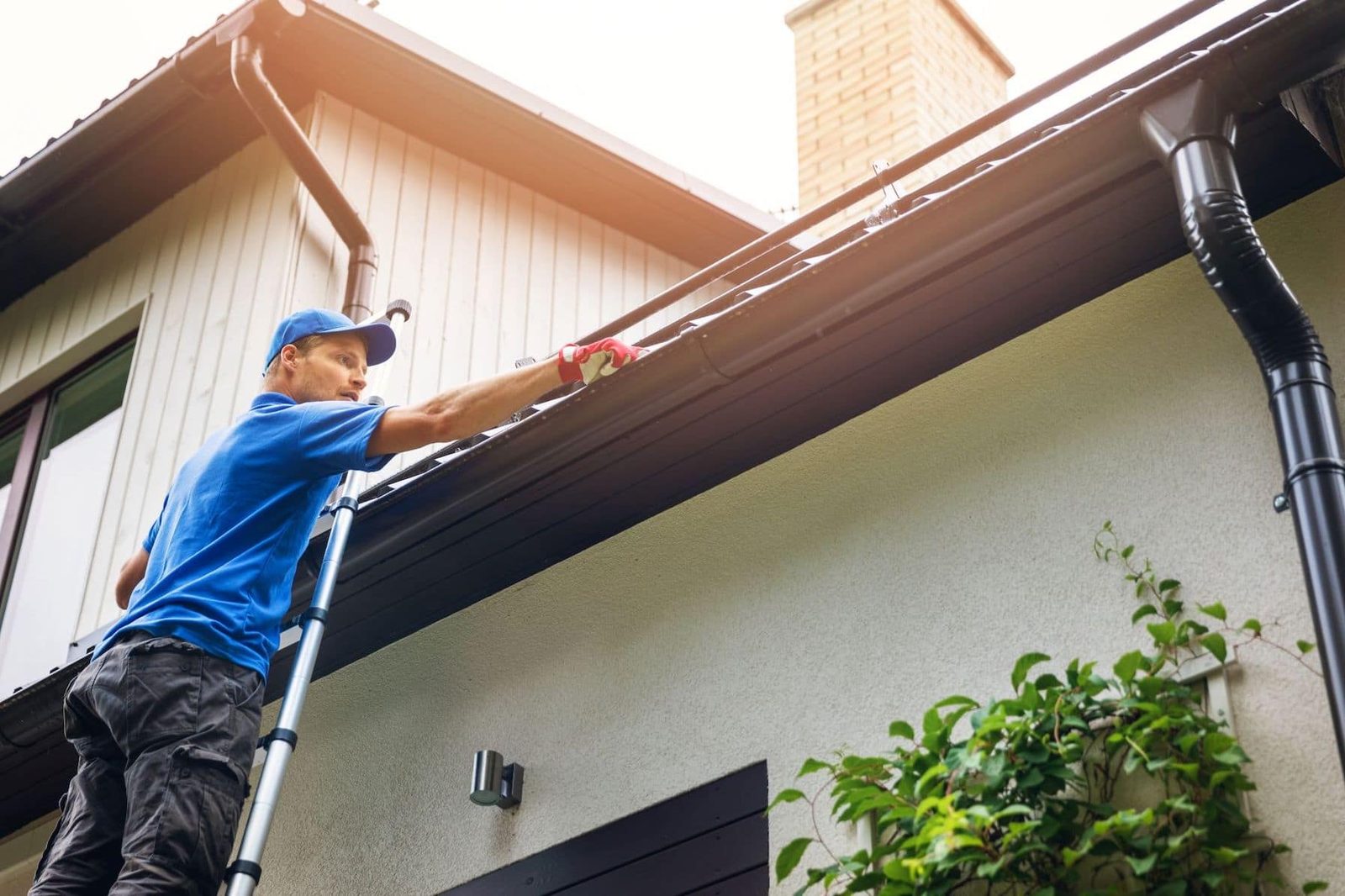
Downspout upsells we will not push
A 3x4 on a garden shed. A 2x3 is plenty there.
Copper downspouts sold as an upgrade on a vinyl-sided ranch. They're beautiful on the right house and wasted money on the wrong one.
New downspouts when the real trouble is a buried line that's collapsed or full of roots. We'd find that first, before anyone sells you more metal.
Downspout size questions
Can I add a downspout instead of upsizing?
Often, yes. An extra outlet on a long run splits the water and shortens how far it travels in the gutter. Sometimes that does more than one bigger downspout would. It depends on where the water can go once it reaches the ground.
Will 3x4 downspouts fit my existing gutter?
They fit standard five-inch and six-inch K-style gutters. The outlet hole has to be cut larger, so the old outlet gets replaced or a new one is added. Small or old four-inch gutters may not take them well.
Do bigger downspouts stop clogging completely?
No. They clog much less because debris has more room to pass, but a mat of wet oak tassels can still plug anything. A guard over the outlet and a yearly look at the first elbow help.
How do I tell if my downspouts are 2x3 or 3x4?
Hold a tape measure across the face. About two inches by three is the smaller size, and about three by four is the larger. Side by side, the difference is obvious.
Are round downspouts the same thing?
Round downspouts usually go with half-round gutters and are sized by diameter, such as three or four inches. They drain well and suit older homes, but they're a separate system from the rectangular drops on K-style gutters.
Downspout estimate
Let us know how many downspouts you have and where they clog, and we'll size the fix.
Downspouts sized for the storm by a St. Louis gutter company
We're John Beal Roofing, run by the third generation of a family that started the business in 1947. Somebody real answers the phone at any hour of the day or night. The company holds a BBB A+ rating, is an Owens Corning Platinum Preferred contractor and made Roofing Contractor Magazine's Top 100. Our installs carry a lifetime workmanship warranty, and we'll give you an estimate for free.