
Reading the peel pattern
Where the paint is failing says a lot. A long, even strip along the fascia usually means water is getting behind the gutter along its whole length. A patch the size of a dinner plate under one corner points to a leaking miter or overflow at that spot. Peeling that starts at the bottom of the siding below a downspout means splash is bouncing back off the ground.
Blisters and flaking aren't the same thing. A blister is moisture pushing out from behind the paint. Flakes with bare gray wood underneath mean the board has been wet and dry so many times the paint simply quit.
Snap a photo before anybody scrapes. It helps match the pattern to the leak.
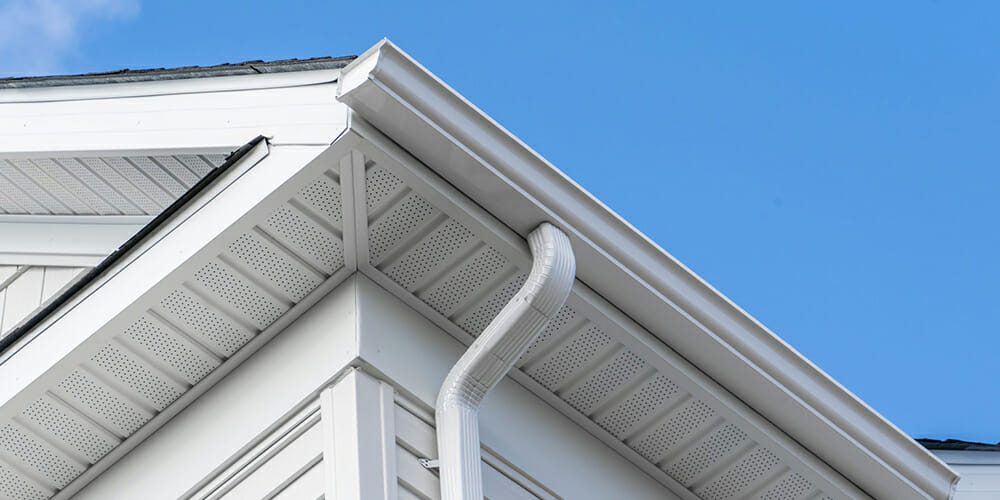
Water sneaking behind the gutter
On plenty of St. Louis houses the shingles stop a little short of the gutter with nothing bridging the gap. In a hard rain, water clings to the underside of the shingle edge and curls back onto the fascia. A few years of that and the board has soaked up enough to push the paint off.
A drip edge or gutter apron slipped under the shingles and over the back of the gutter sends that water into the trough instead. It's a small part and a small add-on to a repair visit. Our page on water behind the gutter goes into the details.
Overflow over the front lip
When a gutter fills faster than it drains, water sheets over the front edge and runs down whatever is below it. On a north county ranch that might be a painted soffit or a porch beam. On a south-city brick two-story it's often the second-floor window trim.
A clogged outlet does this. So does a five-inch gutter catching a big, steep roof plane that really wanted six-inch or a second downspout. If that sounds like your house, overflowing gutters lays out the fixes.
Leaks at seams, corners and end caps
Sectional gutters have a joint roughly every ten feet, and each one is a chance for a slow drip. Seamless gutters still have joints at the corners and end caps. Sealant dries and cracks after enough summers in full sun and winter nights in the teens.
The drip itself is tiny. It lands on the same few inches of trim every single rain, though, and that's exactly where the paint goes first.
Sometimes it's the soffit, not the gutter
Peeling across the underside of the soffit, in an even pattern well back from the edge, isn't always a gutter problem. Warm, damp attic air leaking out through poorly vented soffits can do it. So can a bathroom fan that dumps into the attic instead of outside.
We'll tell you when the gutter is off the hook. Our crews replace and wrap soffit, but attic ventilation is a roofing conversation, and the roofing side of John Beal Roofing handles that one.
Brick below a bad gutter
Painted brick peels under a leaking gutter the same way wood does. Bare brick shows the water differently. White powder on the face, called efflorescence, is salt carried out of the masonry as it dries.
Soft, sandy mortar and brick faces popping off are worse news, especially on an old south-city wall after a hard winter of freezing and thawing. Stop the water and the wall gets a chance to dry. Tuckpointing is a mason's trade, and we'll say so if the joints need it.
Repaint after, not before
Every spring we walk up to a fresh paint job on the trim and a gutter that's still dripping onto it. Wood has to be dry to hold paint, and it can't dry while it's getting soaked every storm.
The order that works is gutter repair or replacement first, then any rotten boards swapped out, then a stretch of dry weather, then paint. We don't paint houses. A good painter will be glad you did it in that order.
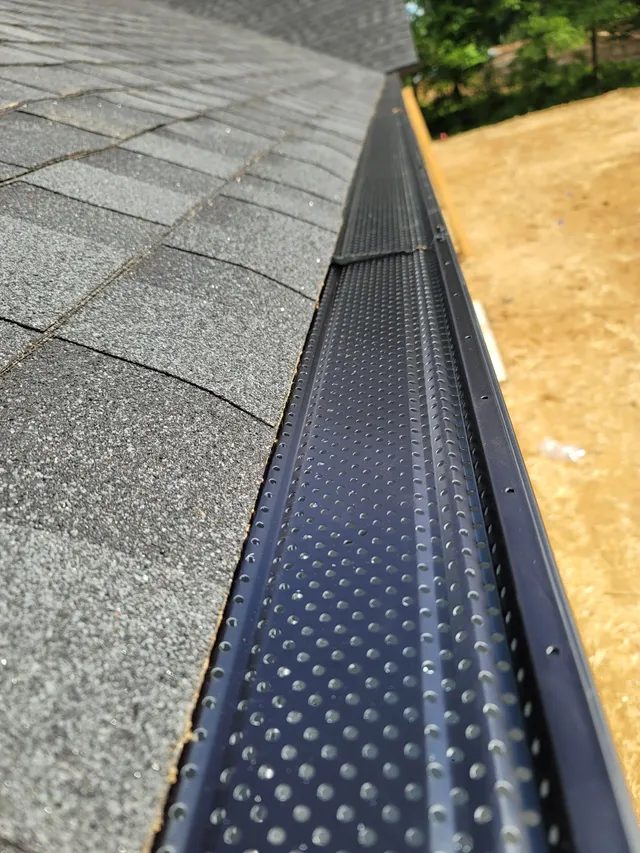
Where the water usually starts
Shortcuts that don't hold up
Wrapping rotten fascia in aluminum. It hides the soft wood for a while, and the rot keeps spreading behind the metal. Bad boards come out first.
Caulking the whole back edge of the gutter to the fascia. That traps water against the wood instead of keeping it off.
Selling guards to fix a drip edge problem. Guards keep leaves out of the trough and do nothing about water curling behind it.
If green or black streaks are showing up next to the peeling, the same water is feeding them, and mold from gutter overflow covers the cleanup.
Peeling paint questions
Why does the paint on my fascia peel again after I repaint?
Because the wood is still getting wet. Until the overflow, seam leak or missing drip edge is fixed, fresh paint will lift in the same place.
Can a gutter make window trim peel on the floor below it?
Yes. Overflow sheets down the wall and catches on the tops of window casings and sills. If the worst peeling sits right under one gutter run, watch that run in the next heavy rain.
Should I replace the fascia or just repaint it?
Push a screwdriver into the board. If it sinks in or the wood crumbles, replace it. If it's firm, it can be scraped, primed and painted once the water source is fixed.
Could peeling come from attic moisture instead of the gutter?
It can, mostly on soffits. Even peeling across the whole soffit away from the edge, or peeling on a side of the house with no overflow, points toward ventilation.
How long should wood dry before I paint it?
Long enough to read dry on a moisture meter, which your painter can check. In practice that means a run of dry weather after the gutter repair, not the weekend after a storm.
Tell us where it's peeling
Fascia, soffit, window trim or siding, and which side of the house.
Stop the drip before the paint job
Three generations of the Beal family have run John Beal Roofing since 1947, and somebody picks up the phone 24/7. BBB A+, Owens Corning Platinum Preferred, Roofing Contractor Magazine Top 100. Our gutter work carries a lifetime workmanship warranty, and estimates are free.